When evaluating ventilation solutions for commercial and light industrial spaces, understanding the distinction between DC and AC motor ceiling fans is an important first step. As a ceiling fan supplier, we frequently receive questions about how motor types influence airflow performance, energy management, and long-term operational stability. An AC motor ceiling fan typically relies on traditional alternating current power, which is widely compatible with existing electrical systems and known for structural simplicity. DC motor ceiling fans, by contrast, use direct current technology with internal conversion, allowing for more precise speed control. From a business perspective, the choice depends on project requirements, installation conditions, and daily operating patterns rather than a single performance metric.
Performance and Application in Commercial Environments
From our experience serving B-end clients, airflow consistency and operational reliability are often prioritized over novelty. AC motor ceiling fans perform reliably in warehouses, offices, and public facilities where steady air circulation is required throughout long working hours. They are known for durability, simplicity, and low maintenance costs, making them ideal for continuous operation in commercial environments. In contrast, DC motor ceiling fans offer higher energy efficiency, quieter operation, and finer speed control, which can be advantageous in spaces like meeting rooms, hotels, or retail areas where noise and energy consumption are more sensitive considerations.
As a ceiling fan supplier, we focus on solutions that improve indoor airflow while supporting temperature balance and reducing localized heat buildup. Properly selected ceiling fans can also enhance air conditioner efficiency by assisting air distribution, aligning with energy management goals without relying on exaggerated performance claims. Ultimately, motor quality, blade design, and installation height together determine real-world effectiveness more than motor type alone.
Product Integration and Practical Design Considerations
Within our product range, we offer both AC and DC ceiling fans to cater to different commercial needs. For example:
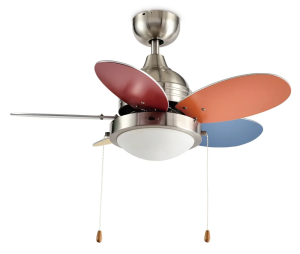
- GFC-305 decorative ceiling fan (AC):
Designed to increase airflow and reduce perceived indoor temperature, this model supports fresh air circulation while lowering the overall load on air conditioning systems. The motor uses high-quality silicon steel sheets for stable operation and low noise output. Lightweight construction enables easier installation, and remote or wall control options provide operational convenience. Seasonal modes for winter and summer use enhance adaptability, while multiple size options fit varied spatial requirements. - CF-100DCA-8B big diameter ceiling fan (DC):
The CF-100DCA-8B is driven directly by advanced brushless DC motor technology, enabling strong propulsion of large air movement at low rotational speed. This structure produces a significant airflow field that promotes continuous circulation, improving ventilation and cooling efficiency across expansive areas. As a large-diameter ceiling fan with a 100-inch sizeand 8 aluminum blades, it is engineered to move air efficiently while maintaining smooth, stable operation. Its application range is broad, delivering reliable performance in industrial plants, logistics warehouses, exhibition centers, agricultural environments, themed venues, restaurants, shopping malls, and other large commercial spaces. The design supports long-term ventilation strategies, enhancing comfort and reducing temperature buildup in environments requiring wide coverage.
By offering different types of ceiling fans, we ensure clients can select solutions based on energy efficiency, noise sensitivity, airflow requirements, and aesthetic preferences, while maintaining reliability and operational simplicity.
Conclusion: Making a Balanced and Informed Choice
In conclusion, choosing between a DC motor ceiling fan and an AC motor ceiling fan should be guided by application context rather than generalized comparisons. As Gaowei Group, we approach ceiling fan solutions with a focus on durability, usability, and compatibility with real commercial settings. As a ceiling fan supplier, our role is to support customers with products that integrate smoothly into offices, public spaces, and mixed-use environments. By assessing operational needs, space characteristics, and control preferences, businesses can select from various ceiling fan types, including industrial, commercial, and residential models, that align with long-term functional goals.