As a long-established fan manufacturer, we often receive questions from system integrators and equipment developers about whether AC or DC technology is more suitable for modern fan systems. From our perspective, the answer depends less on preference and more on application context, control requirements, and long-term operating conditions. At Gaowei Group, our work across industrial ventilation, commercial airflow solutions, and ceiling fan projects allows us to evaluate AC motor and DC motor options based on real engineering needs rather than simplified assumptions.
Understanding AC Motor Applications in Fan Systems
AC motors remain a common choice in fan systems where structural simplicity and stable grid power are key considerations. In many industrial and commercial environments, AC-driven fans support continuous operation with standardized electrical interfaces. For a fan manufacturer serving B-end clients, AC motor solutions are often selected for projects that emphasize durability, straightforward maintenance, and compatibility with existing infrastructure.
From a system design standpoint, AC motor and DC motor comparisons frequently highlight control precision. While AC systems may rely on external frequency conversion for speed adjustment, they are still well suited for applications where airflow regulation does not require rapid or frequent changes. In this context, AC motor-based fans continue to serve factories, warehouses, and certain building ventilation systems effectively.
DC Motor Systems and Control-Oriented Fan Design
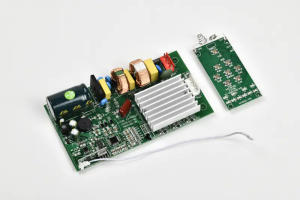
In recent years, DC motor-based fan systems have gained attention due to their control flexibility and efficiency at variable speeds. Our electronic control technology center focuses on circuit design and production for brushless DC control, providing integrated solutions for ceiling fan systems and other airflow equipment. As a fan manufacturer involved in customized projects, we see DC motor solutions frequently applied in scenarios requiring precise speed regulation, lower operational noise, and responsive control logic.
When engineers compare AC motor and DC motor options, DC technology often aligns better with smart control environments. Our ceiling fan case demonstrates how brushless frequency conversion control appliances support stable operation across different load conditions. These solutions also benefit from customized design services, allowing system-level integration for home appliances, electric tools, and control-oriented equipment.
Conclusion: Choosing the Right Motor for Modern Fan Systems
So, which is better for modern fan systems: AC or DC? From our experience, the decision should reflect system objectives rather than a generalized preference. AC solutions remain practical for standardized, continuous-duty environments, while DC solutions offer advantages where control precision and adaptability are required. As a fan manufacturer serving B-end markets, we focus on matching motor technology to real operational needs. At Gaowei Group, our ongoing work with AC motor and DC motor systems helps us support customers with practical, application-driven fan solutions.